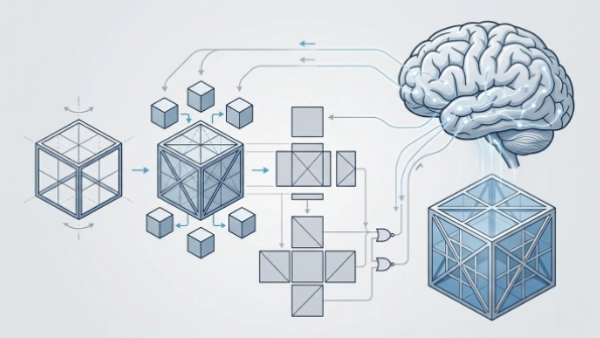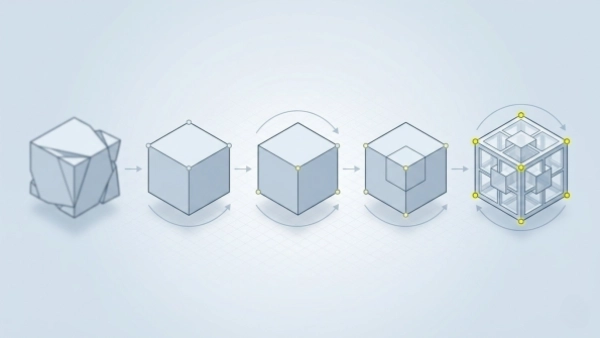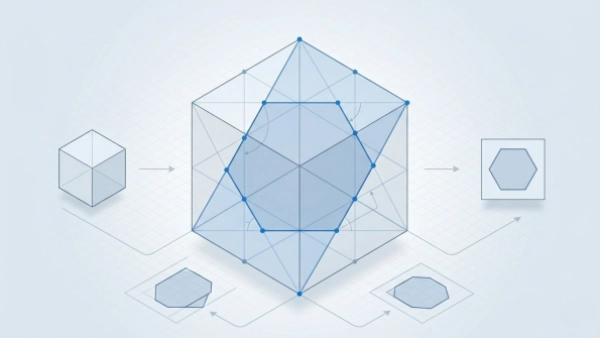
Spatial logic questions look deceptively simple. A cube rotates. A paper folds. A shape is cut. The instructions are short, the diagrams are clean, and the answer choices seem straightforward.
Yet many people struggle with these problems—even highly educated adults. The difficulty isn’t usually intelligence. It’s cognitive strategy.
Understanding why people fail spatial reasoning tasks is the first step toward fixing the problem. And the good news is this: spatial ability is highly trainable when you know what to adjust.
What Spatial Logic Questions Actually Measure
Spatial logic tasks appear in IQ assessments, engineering entrance exams, architecture screenings, military aptitude batteries, and technical hiring tests. They are not designed to test vocabulary, memorized formulas, or academic knowledge. Instead, they assess how effectively your mind can construct, manipulate, and monitor objects in three-dimensional space.
At their core, these questions measure several interlocking abilities:
- Mental rotation – Turning objects in the mind without physically moving them
- Perspective shifting – Changing viewpoint while keeping the object structurally constant
- Transformation tracking – Following folds, cuts, flips, or assemblies step by step
- Structural preservation – Maintaining awareness of adjacency and proportions
- Constraint reasoning – Identifying which outcomes are physically impossible
Unlike verbal or mathematical reasoning, spatial problems demand internal simulation. You must run a mental model forward in time and observe the result. To understand the neuroscience behind why this is cognitively demanding, read how the brain processes 3D space.
- There is no equation to plug into.
- There is no sentence to parse.
- There is only structure and transformation.
This requirement—to simulate change without external support—is precisely where most failures begin.
Why Most People Fail
1. They Try to “See Everything at Once”
The most common mistake is attempting a full transformation in a single mental leap.
The brain’s working memory can hold only a limited number of visual elements at once. When someone tries to rotate an entire cube 180° instantly, the image destabilizes. Faces blur. Edges detach. Orientation shifts unintentionally.
The failure is not about intelligence. It is about cognitive overload.
When too many elements change simultaneously, the mental image collapses under its own complexity.
The fix: Slow the process down.
- Rotate 90° at a time.
- Follow one marked face instead of all six.
- Break folding tasks into hinge-by-hinge movements.
Structured sequencing reduces load and stabilizes imagery. For a complete method built around this principle, see our step-by-step framework for solving 3D spatial problems.
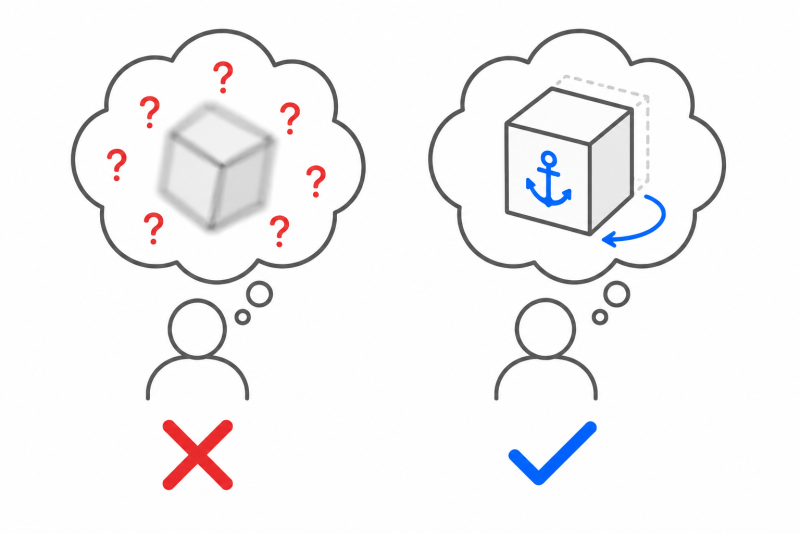
2. They Don’t Anchor the Object
Without a fixed reference point, spatial images “float.” As the object rotates, the viewer’s perspective may also shift unconsciously. This double motion creates internal contradiction.
For example, someone rotates a cube clockwise—but also mentally rotates themselves around it. The result is confusion disguised as difficulty.
The fix: Establish a stable anchor before doing anything.
Effective anchors include:
- A marked or shaded face
- A distinct corner
- A fixed “top” orientation
Once chosen, the anchor becomes your reference. You track its movement relative to the rest of the object. You do not let it drift.
Anchoring alone eliminates a large percentage of spatial errors. This technique is especially critical when working through mental rotation problems, where disorientation is the leading cause of wrong answers.
3. They Confuse Rotation with Reflection
Rotations preserve orientation. Reflections reverse it.
This distinction seems simple in theory but is frequently misapplied under pressure. Many test designers intentionally include mirrored distractors because they look nearly correct.
If a problem specifies rotation only, a mirrored answer is automatically wrong—even if it appears visually similar.
The fix: Check left–right consistency.
If a symbol was on the left side of a face before rotation, it must remain on the corresponding rotated side—not suddenly appear mirrored.
When unsure, verify adjacency relationships. Rotations preserve which faces touch. Reflections may alter orientation patterns.
4. They Ignore Structural Invariants
Spatial transformations change orientation, not structure.
Certain properties remain constant:
- Which faces share edges
- The number of components
- Edge connections
- Relative positioning of markings
Under time pressure, people often focus on surface appearance instead of structural integrity. They ask, “Does this look similar?” instead of, “Is this structurally possible?”
Wrong answers typically violate at least one invariant.
The fix: Before selecting an answer, perform a structural audit:
- Are originally adjacent faces still adjacent?
- Did any edges appear or disappear?
- Are proportions consistent?
Systematic invariant checking turns intuition into disciplined reasoning. This is the core technique behind solving cross-section problems systematically — where structure, not appearance, is always the deciding factor.
5. They Over-Rely on Verbal Reasoning
Strong verbal thinkers often attempt to narrate spatial transformations internally:
“The top moves left, the left becomes the back…”
This verbal chain quickly becomes tangled. Language is linear and symbolic. Spatial change is multidimensional and relational.
Verbal translation adds unnecessary cognitive load.
The fix: Replace narration with visualization.
Let the object move in your mental field instead of describing its motion in words.
If needed, sketch minimal orientation cues on paper—not detailed drawings, just structural guides.
Spatial tasks should be handled spatially.
6. They Jump Directly to the Final Answer
Another common mistake is premature pattern matching. Instead of constructing the transformation step by step, people scan answer choices and pick the one that “feels right.”
This works only when distractors are weak. In high-quality tests, incorrect answers are designed to resemble the correct solution while subtly violating structure.
The fix: Use elimination before full visualization.
Remove options that:
- Break adjacency rules
- Introduce reflections when none were specified
- Distort proportions
- Show impossible alignments
Often, elimination reduces five choices to two before complete reconstruction is necessary.
7. They Lack Practice With Dynamic Imagery
Most educational systems emphasize reading, writing, and symbolic manipulation. Dynamic mental imagery receives comparatively little structured training.
As adults, many people have simply not exercised the skill of rotating or transforming objects mentally.
The resulting instability feels like low ability—but it is usually low exposure.
The fix: Train deliberately.
Effective drills include:
- Timed mental rotation exercises
- Cube net folding problems
- Cross-section visualization
- 3D assembly challenges
- Perspective-shift comparisons
Like physical training, repetition strengthens neural efficiency. Mental images become clearer. Transformations become faster and more precise. To build this through a structured progression, follow our 30-day spatial reasoning training plan.
The Psychological Trap: Confidence Collapse
Spatial instability creates doubt. Doubt increases mental tension. Tension consumes cognitive resources. Reduced resources further destabilize imagery.
This cycle produces performance far below potential.
Breaking the cycle requires structure—not reassurance.
When you apply anchors, invariants, and incremental transformations, the task becomes controlled rather than chaotic. Stability restores confidence. Confidence improves performance.
A Practical Correction Framework
When facing a spatial logic question, apply this structured sequence:
- Classify the task – Is it rotation, folding, cutting, assembly, or perspective shifting?
- Choose an anchor – Fix one stable reference point.
- Constrain movement – Apply changes incrementally, not globally.
- Preserve invariants – Monitor adjacency and structure.
- Eliminate impossibilities – Remove structurally invalid options first.
- Reconstruct carefully – Only if necessary.
This method transforms spatial reasoning from intuition-driven to rule-guided. Each of these six steps is explained in full detail in our complete step-by-step framework for 3D spatial problems.
Why Spatial Ability Is Trainable
Research in cognitive psychology consistently shows improvement with targeted practice. Mental rotation speed increases. Working memory coordination improves. Transformations feel smoother and more stable.
Importantly, spatial gains often transfer into other domains:
- Engineering and design precision
- Geometry and physics understanding
- Surgical and mechanical accuracy
- Navigation and environmental awareness
- Complex system modeling
Spatial intelligence is not fixed. It is a developable cognitive system built through exposure and repetition.
The Real Reason People Fail
Most failures in spatial logic do not reflect low intelligence. They reflect inefficient strategy.
- People overload working memory.
- They fail to anchor.
- They confuse rotation with reflection.
- They ignore invariants.
- They rely on unstable intuition instead of structure.
When those habits change, performance changes dramatically.
Spatial reasoning is not about “seeing everything instantly.”
It is about controlling transformation carefully.
And that skill can be learned.
Final Insight
Spatial logic questions reward structured visualization, not raw mental imagery.
The difference between failure and mastery is rarely innate ability. It is strategy.
Once you stop trying to "see everything at once" and start applying anchors, invariants, and elimination, spatial problems become predictable and solvable. And that shift is entirely within your control. To explore how spatial intelligence fits alongside other cognitive skills, read about spatial intelligence vs logical and verbal intelligence.
Put this shift into practice right now — take our free 18-minute IQ exam and see how your spatial reasoning holds up under real time pressure.