The relationship between education and intelligence has long been debated by psychologists, educators, and researchers. Many people assume that IQ is mostly determined by genetics and remains fixed throughout life. However, modern research suggests that education can play a significant role in shaping cognitive abilities and even influencing IQ scores.
So, does education actually increase IQ? The answer is more complex than a simple yes or no. Education can strengthen many cognitive skills measured by IQ tests, but intelligence itself is influenced by multiple factors.
Understanding What IQ Measures
IQ (Intelligence Quotient) tests are designed to measure certain cognitive abilities such as:
- Logical reasoning
- Problem-solving skills
- Pattern recognition
- Verbal comprehension
- Memory and processing speed
Most IQ tests use a standardized scoring system where the average score is 100 and results are compared across the population.
z = (x - μ) / σ
In this formula:
- x represents an individual score
- μ (mu) represents the population average
- σ (sigma) represents the standard deviation
This statistical approach allows psychologists to evaluate cognitive ability relative to others.
Evidence That Education Can Raise IQ Scores
Several large-scale studies have found that additional years of schooling are associated with higher IQ scores.
Researchers have discovered that:
- Each additional year of education may increase IQ scores by 1 to 5 points on average.
- Students who remain in school longer often perform better on cognitive tests.
- Education strengthens skills such as reasoning, vocabulary, and problem solving.
This effect occurs because school environments constantly challenge the brain with new information, analytical tasks, and learning experiences.
How Education Influences Cognitive Development
Education does not simply add knowledge—it also trains the brain to think in more complex ways.
Some ways education enhances cognitive abilities include:
Improving Problem-Solving Skills
School subjects such as mathematics, science, and logic encourage students to analyze problems and develop structured solutions.
Expanding Vocabulary and Language Skills
Reading, writing, and communication activities improve verbal reasoning, which is a key component of many IQ tests.
Strengthening Memory and Attention
Learning new material requires students to focus, memorize information, and retrieve knowledge effectively.
Encouraging Abstract Thinking
Advanced education introduces concepts that require deeper reasoning, such as theoretical science, philosophy, and complex systems.
These mental exercises help build the types of abilities that IQ tests measure.
The Role of Brain Development
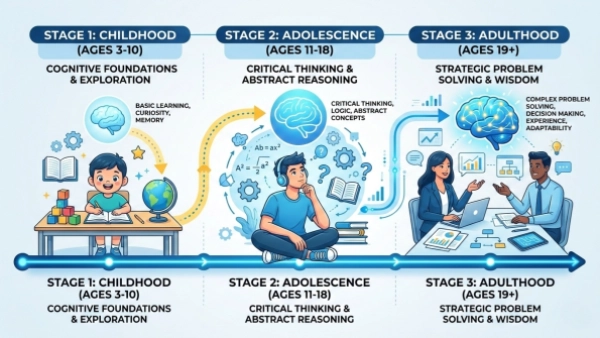
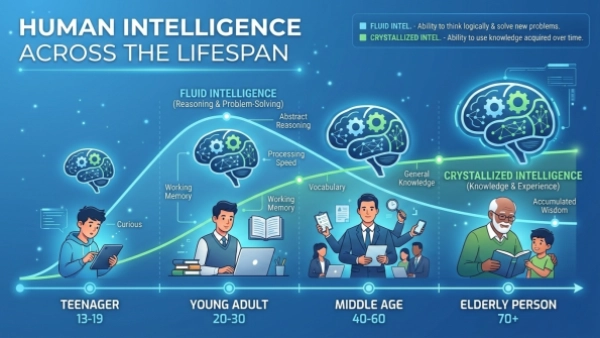
Education also interacts with brain development, especially during childhood and adolescence.
During these stages, the brain is highly adaptable due to neuroplasticity, the brain’s ability to reorganize and form new connections.
Stimulating learning environments can:
- Strengthen neural networks
- Improve cognitive flexibility
- Increase processing efficiency
This is one reason why early childhood education can have lasting effects on cognitive development.
Limits of Education’s Impact on IQ
Although education can influence IQ scores, it does not completely determine intelligence.
Several other factors also contribute to cognitive ability, including:
- Genetics
- Nutrition and physical health
- Early childhood environment
- Socioeconomic conditions
- Mental stimulation outside school
Additionally, IQ tests measure only certain aspects of intelligence and do not capture creativity, emotional intelligence, or practical skills.
The Flynn Effect: Rising IQ Scores Over Time
Another interesting phenomenon related to education is the Flynn Effect, which refers to the steady rise in average IQ scores observed across many countries over the past century.
Researchers believe this trend is partly due to:
- Improved education systems
- Greater access to information
- Better nutrition and healthcare
- Increased exposure to complex problem-solving tasks
Modern environments may encourage more abstract thinking than previous generations experienced.
Education vs Natural Ability
It’s important to recognize that education and natural ability work together.
People with strong natural cognitive abilities may find academic learning easier, but education still helps refine and expand those abilities.
Similarly, individuals with average natural ability can significantly improve their cognitive skills through learning, practice, and intellectual engagement.
In many cases, consistent learning habits matter more than raw intelligence.
Final Thoughts
Education does not magically create intelligence, but it can significantly strengthen many of the cognitive skills measured by IQ tests. Research shows that schooling, intellectual challenges, and learning opportunities can lead to measurable improvements in IQ scores.
However, intelligence is influenced by a complex mix of genetics, environment, experience, and personal effort. Education is simply one of the most powerful tools available for developing the brain’s full potential.
Ultimately, lifelong learning—whether through formal education or personal curiosity—remains one of the best ways to keep the mind active, adaptable, and intellectually strong.