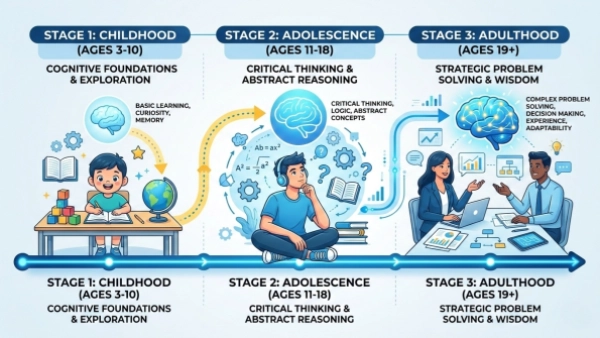
Many people assume that cognitive abilities peak in youth and gradually decline as we grow older. While certain mental functions may slow with age, modern research shows that the relationship between aging and cognitive ability is far more complex. In fact, some cognitive skills can improve with age, especially when individuals stay mentally active and continue learning.
Understanding how the brain changes over time helps explain why aging does not necessarily mean a loss of intellectual ability.
What Are Cognitive Skills?
Cognitive skills are the mental processes that allow us to think, learn, remember, and solve problems. These abilities enable us to process information and interact effectively with the world around us.
Some key cognitive skills include:
- Memory
- Attention
- Problem-solving
- Logical reasoning
- Language comprehension
- Decision-making
These abilities are often measured in intelligence and psychological assessments to evaluate overall cognitive performance.
Different Types of Intelligence Change Differently
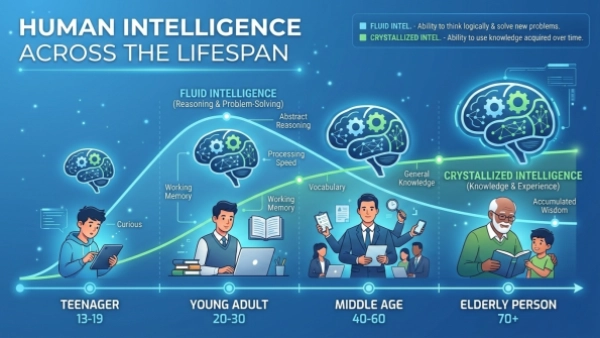
Psychologists often distinguish between two major types of intelligence:
Fluid Intelligence
Fluid intelligence involves the ability to solve new problems, identify patterns, and think abstractly without relying on prior knowledge.
Examples include:
- Solving puzzles
- Recognizing patterns
- Logical reasoning in unfamiliar situations
Fluid intelligence tends to peak in early adulthood, typically in the 20s or early 30s.
Crystallized Intelligence
Crystallized intelligence refers to accumulated knowledge and experience gained through learning and life.
Examples include:
- Vocabulary
- General knowledge
- Expertise in specific fields
- Language and communication skills
Unlike fluid intelligence, crystallized intelligence often continues improving well into middle age and beyond.
Why Some Cognitive Skills Improve With Age
Several factors contribute to the improvement of certain cognitive abilities as people grow older.
Accumulated Knowledge
Years of learning, reading, and professional experience gradually build a large store of knowledge that strengthens reasoning and understanding.
Better Decision-Making
Older adults often rely on experience and judgment, which can lead to more thoughtful and balanced decisions.
Pattern Recognition From Experience
Repeated exposure to similar situations helps the brain recognize patterns more quickly and accurately.
This experience-based thinking can sometimes compensate for slower processing speed.
The Role of Brain Plasticity
The human brain remains capable of change throughout life thanks to a property known as neuroplasticity.
Neuroplasticity allows the brain to:
- Form new neural connections
- Strengthen frequently used pathways
- Adapt to new challenges and environments
Mental activities such as learning a new language, solving puzzles, or mastering new skills can stimulate brain growth even in later years.
Lifestyle Factors That Support Cognitive Improvement
While aging alone does not guarantee cognitive improvement, certain habits strongly influence brain health.
Lifelong Learning
Engaging in education, reading, or learning new skills helps keep the brain active and adaptable.
Physical Exercise
Regular physical activity improves blood flow to the brain and supports healthy neural function.
Social Interaction
Maintaining strong social connections stimulates communication skills and emotional processing.
Mental Challenges
Activities such as chess, puzzles, strategy games, and creative hobbies help strengthen cognitive flexibility.
Common Cognitive Changes With Age
Although some abilities improve, others may change over time.
Typical age-related cognitive patterns include:
Abilities that may slow slightly:
- Processing speed
- Short-term memory retrieval
- Rapid problem solving
Abilities that often improve or remain stable:
- Vocabulary
- Knowledge and expertise
- Emotional regulation
- Decision-making based on experience
These changes reflect the brain’s shift from speed-based thinking to knowledge-based reasoning.
The Importance of a Growth Mindset
One of the most powerful influences on cognitive development is mindset. People who believe the brain can continue growing are more likely to stay mentally engaged and pursue new challenges.
A growth mindset encourages:
- Curiosity
- Continuous learning
- Adaptability
- Intellectual resilience
These qualities help individuals maintain strong cognitive function throughout life.
Final Thoughts
Cognitive skills do not simply decline with age. While some mental processes may slow, many important abilities—especially knowledge, reasoning based on experience, and emotional understanding—can continue improving over time.
By staying intellectually active, maintaining healthy habits, and embracing lifelong learning, individuals can support their cognitive abilities well into later life.
Aging does not have to mean losing mental sharpness. In many ways, it can bring a deeper and more refined form of intelligence built on years of knowledge and experience.