The human brain is not a fixed or static organ. Instead, it has an extraordinary ability to adapt, reorganize, and change throughout life. This ability is known as brain plasticity, often called neuroplasticity. Brain plasticity allows the brain to form new connections, strengthen existing ones, and sometimes even reassign functions from damaged areas to healthier regions.
Understanding brain plasticity helps explain how people learn new skills, recover from injuries, and continue developing mentally as they age.
What Is Brain Plasticity?
Brain plasticity refers to the brain’s ability to modify its structure and function in response to experiences, learning, and environmental changes. Every time you learn something new, practice a skill, or adapt to a new situation, your brain forms or strengthens neural pathways.
These pathways are networks of neurons that communicate with each other. The more frequently a pathway is used, the stronger it becomes. Over time, repeated experiences shape how the brain processes information.
This means that learning, memory, and behavior are closely tied to the brain’s ability to reorganize itself.
Types of Brain Plasticity
Scientists generally describe two main forms of brain plasticity.
Structural Plasticity
Structural plasticity refers to physical changes in the brain’s structure. This may include the growth of new neural connections or changes in the strength of existing ones.
Structural plasticity commonly occurs when people:
- Learn new skills
- Study new information
- Practice complex tasks
- Experience significant life changes
The brain literally reshapes its neural networks to support new learning and behaviors.
Functional Plasticity
Functional plasticity occurs when the brain shifts functions from one region to another. This is especially important after brain injuries.
For example, if a specific area responsible for movement is damaged, another region of the brain may gradually take over that function through rehabilitation and repeated training.
This ability explains why many people can recover skills after strokes or traumatic brain injuries.
Brain Plasticity and Learning
Learning is one of the strongest drivers of neuroplasticity. Each new skill or concept strengthens connections between neurons. Activities that challenge the brain—such as learning a language, solving complex problems, or practicing music—encourage the formation of new neural pathways.
Over time, repeated practice leads to stronger and more efficient brain networks. This is why experts in a field often perform tasks faster and more accurately than beginners.
The brain becomes optimized for frequently used skills.
Brain Plasticity Across the Lifespan
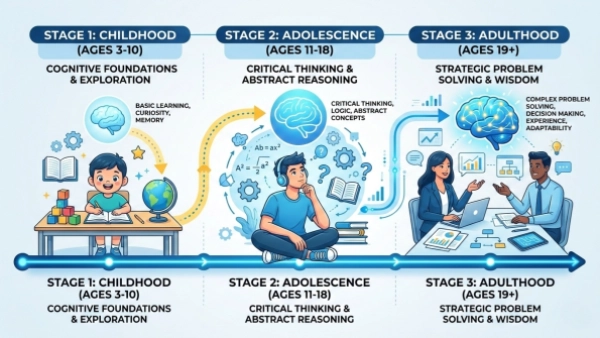
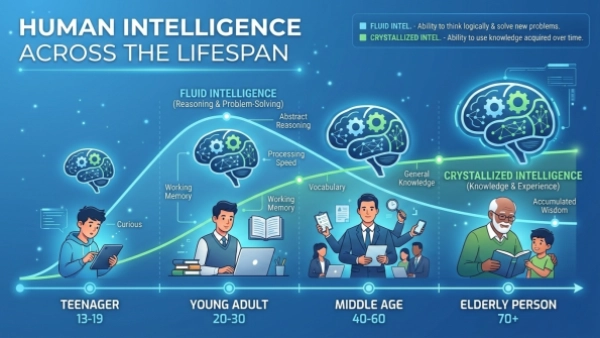
Brain plasticity is most active during childhood, when the brain is rapidly developing. During this time, children easily acquire language, motor skills, and social behaviors.
However, plasticity does not disappear in adulthood. The adult brain still retains the ability to adapt and change, although the process may occur more gradually.
Even in older adulthood, the brain can continue to form new connections when stimulated by learning, physical activity, and meaningful experiences.
This lifelong adaptability is one of the reasons cognitive development can continue well into later life.
Factors That Influence Brain Plasticity
Several lifestyle and environmental factors can influence the brain’s ability to adapt.
Learning and Mental Stimulation
Regular mental challenges strengthen neural connections and encourage the formation of new pathways. Activities such as reading, studying, solving puzzles, and creative work stimulate the brain.
Physical Exercise
Exercise increases blood flow to the brain and promotes the release of growth factors that support neuron health and connection formation.
Sleep
Sleep helps the brain consolidate memories and reinforce neural pathways formed during the day.
Social Interaction
Meaningful conversations and social experiences activate multiple cognitive systems, encouraging neural flexibility.
Stress Levels
Chronic stress may interfere with neuroplasticity by affecting brain structures involved in memory and emotional regulation.
Maintaining a balanced lifestyle can help support the brain’s natural adaptability.
Brain Plasticity and Recovery
One of the most remarkable aspects of brain plasticity is its role in recovery after injury. Following strokes, head injuries, or neurological disorders, rehabilitation programs often rely on the brain’s ability to reorganize itself.
Through consistent therapy and practice, new neural pathways can develop to compensate for lost functions. While recovery outcomes vary, neuroplasticity provides a scientific basis for rehabilitation and improvement over time.
Conclusion
Brain plasticity demonstrates that the brain is constantly evolving. Rather than remaining fixed after childhood, the brain continues to adapt, reorganize, and grow throughout life.
Learning new skills, staying mentally active, maintaining healthy habits, and engaging with the world all encourage the brain to build stronger neural networks.
This remarkable adaptability means that personal growth, skill development, and cognitive improvement remain possible at every stage of life.