An IQ score of 130 is widely recognized as a high level of cognitive ability. In many discussions about intelligence testing, this number often appears as a benchmark for “gifted” intelligence and for admission to high-IQ organizations. However, understanding what an IQ of 130 truly represents requires looking beyond the number itself.
IQ scores are not absolute measurements of intelligence. Instead, they are statistical comparisons that show how an individual’s reasoning abilities relate to those of the general population.
Where an IQ of 130 Falls on the IQ Scale
Most modern intelligence tests use a scoring system where:
- The average IQ is 100
- The standard deviation is 15
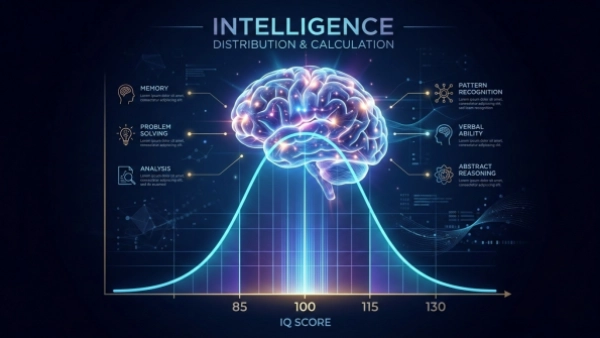
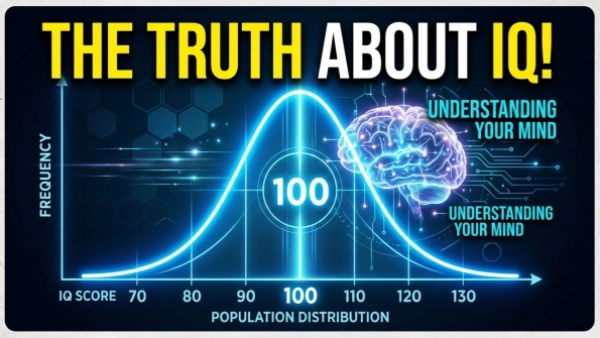
This means most people score somewhere between 85 and 115, which represents the middle portion of the population.
An IQ of 130 is two standard deviations above the average. Statistically, this places someone near the 98th percentile, meaning they score higher than about 98% of people.
To understand this statistically, psychologists use the concept of a standard score (z-score):
z = (x - μ) / σ
Where:
- x = the individual’s score
- μ = the population mean (100)
- σ = the standard deviation (15)
For a score of 130, the calculation shows that the result is two standard deviations above the average, which explains why it falls within the top few percent of the population.
How Rare Is an IQ of 130?
Because IQ scores follow a normal distribution, high scores become progressively rarer as they move away from the average.
Approximate distribution:
| IQ Score | Percentile | Frequency |
| 100 | 50th percentile | Average |
| 115 | 84th percentile | Above average |
| 130 | 98th percentile | Top 2% |
| 145 | 99.9th percentile | Extremely rare |
In practical terms, only about 2 out of every 100 people score at or above 130 on standardized intelligence tests.
This is why many high-IQ organizations, including Mensa, set their membership threshold around the 98th percentile, which corresponds roughly to an IQ of 130.
What Cognitive Abilities Are Associated with a 130 IQ?
An IQ score in this range often reflects strong performance in several types of cognitive tasks. These typically include:
- Abstract reasoning
- Logical problem-solving
- Pattern recognition
- Complex verbal comprehension
- Spatial reasoning
- Rapid learning of new concepts
These abilities are measured through standardized tests such as the Wechsler Adult Intelligence Scale and the Stanford–Binet Intelligence Scales.
Individuals who score around 130 often demonstrate an ability to grasp complex ideas quickly, analyze patterns efficiently, and solve unfamiliar problems more easily than the average person.
Does an IQ of 130 Mean Someone Is a Genius?
Not necessarily.
While a score of 130 is considered very high, psychologists typically reserve the term genius for much rarer levels of cognitive ability—often associated with IQ scores above 140 or 145.
Even then, the label “genius” is subjective and often depends on achievements rather than test scores alone.
Many highly accomplished innovators, scientists, and artists became influential not only because of their cognitive ability but also because of creativity, persistence, and opportunity.
What an IQ of 130 Does Not Guarantee
A common misconception is that a high IQ automatically leads to success. In reality, intelligence is only one factor that influences life outcomes.
An IQ score—even a high one—does not directly measure:
- Creativity
- Emotional intelligence
- Motivation and perseverance
- Social skills
- Leadership ability
These qualities can play a major role in academic, professional, and personal success.
Research in psychology consistently shows that non-cognitive traits, such as discipline and curiosity, are also powerful predictors of achievement.
How Stable Is an IQ of 130?
IQ scores tend to remain relatively stable after adolescence, especially when measured with professionally administered tests.
However, scores can vary slightly depending on:
- Test format
- Testing conditions
- Health, stress, or fatigue
- Measurement error
For this reason, psychologists view IQ scores as estimates within a range, rather than precise fixed numbers.
The Bigger Picture of Intelligence
An IQ of 130 indicates strong reasoning ability compared to the general population. It suggests a high level of performance on tasks that involve logic, pattern recognition, and problem-solving.
But intelligence is not a single dimension.
Human cognitive ability includes many forms of thinking, including creativity, emotional awareness, practical judgment, and the capacity to adapt to new situations.
IQ tests capture an important aspect of intelligence—but they represent only one piece of a much larger and more complex picture.
Final Thoughts
Scoring 130 on an IQ test places someone among the top few percent of the population in terms of measured cognitive reasoning ability. It is a statistically rare result and often associated with advanced analytical thinking.
However, intelligence cannot be fully defined by a number alone. Real-world achievement depends on many additional factors, including curiosity, determination, creativity, and opportunity.
In the end, an IQ score can offer insight into how someone thinks—but it does not determine what they will accomplish or who they will become.