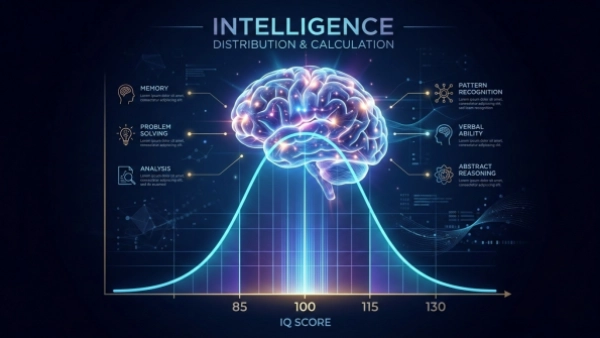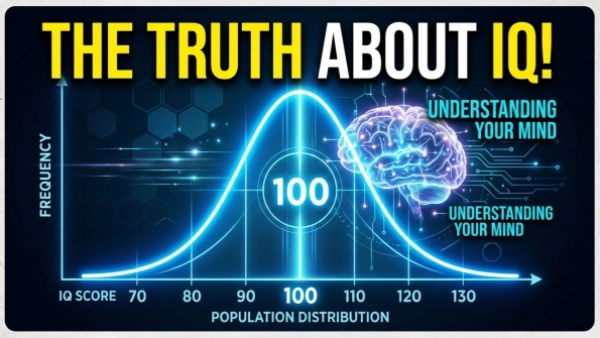
For decades, intelligence has often been summarized by a single number: the IQ score. Schools, psychologists, and even employers have used IQ tests to estimate cognitive ability and predict performance. While these tests measure certain mental skills effectively, they capture only a small part of what it truly means to be intelligent.
Modern research in psychology suggests that human intelligence is far more complex. It involves a combination of cognitive abilities, creativity, emotional awareness, social understanding, and the capacity to adapt to new situations.
The Traditional View of Intelligence
Traditional intelligence testing emerged in the early 20th century. One of the earliest pioneers was Alfred Binet, who developed tests designed to identify children needing additional academic support.
Later, standardized assessments such as the Stanford–Binet Intelligence Scales and the Wechsler Adult Intelligence Scale became widely used to measure cognitive skills like reasoning, memory, and verbal ability.
These tests are useful tools, but they primarily measure analytical thinking and problem-solving under structured conditions. They do not fully capture other dimensions of intelligence that are crucial in everyday life.
Intelligence as a Multifaceted Ability
In recent decades, psychologists have proposed broader theories that expand the definition of intelligence beyond test scores.
One influential idea comes from Howard Gardner, who introduced the Theory of Multiple Intelligences. According to Gardner, intelligence is not a single ability but a collection of different capacities.
These include:
- Logical–mathematical intelligence – reasoning and numerical problem solving
- Linguistic intelligence – language and communication ability
- Spatial intelligence – visualizing and manipulating objects in space
- Musical intelligence – sensitivity to rhythm, tone, and melody
- Bodily–kinesthetic intelligence – coordination and physical skill
- Interpersonal intelligence – understanding other people
- Intrapersonal intelligence – self-awareness and reflection
- Naturalistic intelligence – recognizing patterns in nature
This perspective helps explain why someone may struggle with mathematics but excel in art, leadership, or athletic performance.
The Importance of Emotional Intelligence
Another major development in understanding intelligence is the concept of emotional intelligence, often associated with psychologist Daniel Goleman.
Emotional intelligence refers to the ability to recognize, understand, and manage emotions—both in oneself and in others.
Key components include:
- Emotional awareness
- Self-regulation
- Empathy
- Social skills
- Relationship management
Research shows that emotional intelligence plays a major role in leadership, teamwork, and communication. In many professions, these skills can be just as important as analytical thinking.
Creativity and Innovative Thinking
Creativity is another essential dimension of intelligence that IQ tests often overlook. Creative thinkers generate new ideas, challenge assumptions, and approach problems from unexpected perspectives.
Scientists, artists, entrepreneurs, and inventors frequently rely on creativity to make breakthroughs. Innovation often arises not simply from solving known problems, but from imagining entirely new possibilities.
This kind of thinking requires curiosity, openness to experience, and the willingness to take intellectual risks—qualities that are difficult to measure with traditional testing.
Adaptability and Practical Intelligence
Real-world intelligence also includes the ability to adapt to changing circumstances. Psychologist Robert Sternberg proposed the Triarchic Theory of Intelligence, which divides intelligence into three components:
- Analytical intelligence – traditional problem-solving ability
- Creative intelligence – the ability to generate new ideas
- Practical intelligence – the ability to apply knowledge in real-life situations
Practical intelligence helps individuals navigate complex social environments, make decisions, and solve everyday problems that cannot be reduced to test questions.
Cultural and Environmental Influences
Intelligence is also shaped by culture and environment. Different societies value different types of knowledge and skills.
For example, in some communities, survival skills, cooperation, and environmental knowledge may be highly valued forms of intelligence. In others, academic achievement and technological expertise may be emphasized.
This diversity highlights the limitations of defining intelligence through a single universal measurement.
Lifelong Development of Intelligence
Another misconception is that intelligence is fixed. While genetic factors influence cognitive potential, research shows that learning, education, and experience can significantly shape intellectual development.
Activities that stimulate the brain—such as reading, problem-solving, learning new skills, and engaging in meaningful conversations—can strengthen cognitive abilities throughout life.
In this sense, intelligence is not simply something people are born with; it is also something that can grow and evolve over time.
Rethinking What It Means to Be Intelligent
Moving beyond IQ scores encourages a more inclusive and realistic understanding of human ability. Intelligence is not just about solving puzzles quickly or performing well on standardized tests.
It is about how people think, learn, create, connect with others, and adapt to the challenges of the world around them.
Conclusion
IQ tests remain valuable tools for measuring certain cognitive skills, but they represent only one piece of the larger puzzle of human intelligence.
True intelligence is multidimensional. It includes analytical reasoning, emotional understanding, creativity, practical problem-solving, and the ability to learn from experience.
By recognizing these broader dimensions, we gain a deeper appreciation of the many ways people can be intelligent—and the many ways they can contribute meaningfully to society.