IQ, or Intelligence Quotient, is one of the most widely discussed concepts in psychology. It is often used to describe a person's intellectual ability, problem-solving skills, and cognitive potential. However, despite its popularity, IQ is frequently misunderstood. Many common beliefs about IQ are based on myths rather than scientific evidence.
Understanding these misconceptions helps provide a clearer picture of what IQ tests actually measure—and what they do not.
What IQ Really Measures
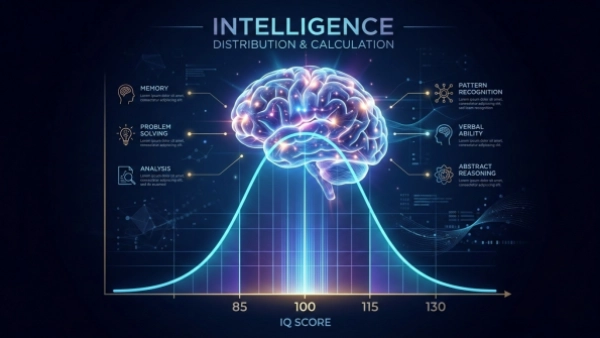
IQ tests are designed to assess certain cognitive abilities, such as reasoning, memory, and problem-solving. Most modern intelligence tests evaluate several mental skills, including:
- Logical and abstract reasoning
- Verbal comprehension
- Working memory
- Processing speed
- Spatial reasoning
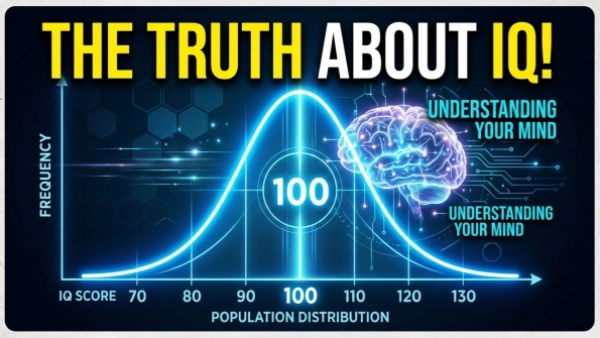
Scores are standardized so that the average IQ is 100, allowing psychologists to compare results across large populations.
Statistical methods are used to determine how far an individual score differs from the population average.
z = (x - μ) / σ
This statistical relationship helps psychologists interpret how unusual or typical a score is within the broader population.
While these measurements are useful, they represent only part of human intelligence.
Myth 1: IQ Measures All Forms of Intelligence
One of the most common misconceptions is that IQ captures every type of intelligence.
In reality, IQ tests primarily measure analytical and logical reasoning abilities. They do not fully evaluate other important abilities such as:
- Creativity
- Emotional intelligence
- Social skills
- Artistic talent
- Practical problem-solving
For example, individuals like Leonardo da Vinci demonstrated extraordinary creativity and innovation that cannot be captured by standard intelligence tests alone.
Human intelligence is far more complex than a single numerical score.
Myth 2: IQ Cannot Change Over Time
Another widespread belief is that IQ is fixed for life. While IQ tends to remain relatively stable during adulthood, it can still be influenced by various factors.
Research shows that cognitive abilities can be affected by:
- Education and learning opportunities
- Nutrition during childhood
- Health and environmental conditions
- Cognitive stimulation and mental activity
In fact, the well-known Flynn Effect demonstrates that average IQ scores have increased across generations, largely due to improvements in education, health, and living conditions.
This shows that environmental factors can play a significant role in intellectual development.
Myth 3: People With High IQs Always Succeed
Many people assume that individuals with very high IQ scores are guaranteed success in life. However, real-world success depends on far more than cognitive ability.
Important factors include:
- Motivation
- Emotional intelligence
- Social skills
- Persistence and discipline
- Opportunity and environment
For example, Thomas Edison achieved groundbreaking inventions not simply because of intelligence but because of his relentless work ethic and determination.
Success usually comes from a combination of abilities rather than intelligence alone.
Myth 4: IQ Tests Are Perfectly Accurate
Although IQ tests are carefully designed psychological tools, they are not flawless measurements.
Several factors can influence test results, including:
- Cultural background
- Language differences
- Educational experience
- Test anxiety or fatigue
Psychologists continuously refine intelligence tests to reduce bias and improve accuracy, but no test can fully capture the complexity of human thinking.
Myth 5: High IQ Means Someone Is a Genius
The terms “high IQ” and “genius” are often used interchangeably, but they are not the same.
A high IQ reflects strong cognitive abilities, especially in analytical reasoning. Genius, however, usually involves creative breakthroughs, innovation, and lasting contributions to society.
For example, Albert Einstein is widely considered a genius not just because of intelligence, but because his ideas fundamentally transformed modern physics.
Genius involves originality and impact, not just high test scores.
Why These Misconceptions Exist
Misunderstandings about IQ often arise because intelligence is difficult to define and measure. Popular media, online tests, and simplified interpretations can also contribute to confusion.
In reality, intelligence is a multidimensional concept influenced by biological, psychological, and environmental factors.
Modern psychology increasingly recognizes that human ability includes many different forms of intelligence.
The Broader View of Human Intelligence
Today, many psychologists emphasize that intellectual ability includes more than analytical reasoning. Other important forms of intelligence include:
- Emotional intelligence
- Creative intelligence
- Practical intelligence
- Social intelligence
These abilities play essential roles in leadership, relationships, innovation, and everyday decision-making.
Recognizing this broader perspective helps avoid oversimplifying intelligence as a single number.
Conclusion
IQ tests remain valuable tools for measuring certain cognitive abilities, particularly logical reasoning and problem-solving. However, many myths and misconceptions surround the concept of IQ.
Intelligence is far more complex than a single score. Creativity, emotional awareness, persistence, and life experiences all contribute to how individuals think, learn, and succeed.
By understanding what IQ tests truly measure—and what they do not—we gain a more accurate and balanced view of human intelligence.