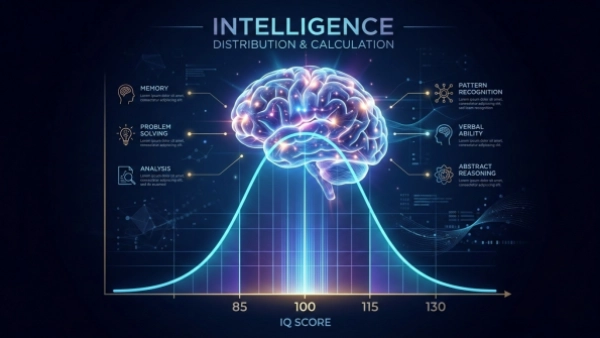
Over the past century, psychologists have observed a surprising trend: average IQ scores around the world have steadily increased. This phenomenon, known as the Flynn Effect, has sparked decades of debate among scientists studying intelligence, education, and human development. The discovery suggests that intelligence test scores are not fixed across generations but can shift significantly over time due to social and environmental changes.
Understanding the Flynn Effect helps researchers better interpret IQ tests and reveals how modern environments shape human cognitive abilities.
What Is the Flynn Effect?
The Flynn Effect refers to the consistent rise in average IQ scores over successive generations. Studies conducted across many countries have shown that IQ scores have increased by roughly 2 to 3 points per decade during the 20th century.
The term was named after political scientist James R. Flynn, who analyzed international intelligence test data and demonstrated that these gains appeared across multiple populations and test types.
Importantly, these increases do not mean that people today are genetically more intelligent than previous generations. Instead, they indicate that environmental and societal changes have improved the cognitive skills measured by IQ tests.
How IQ Scores Are Standardized
IQ tests are designed so that the average score is always set to 100. As populations gradually score higher on older tests, psychologists periodically update and renormalize these tests to maintain the average.
This process relies on statistical comparisons between individual scores and the broader population.
z = (x - μ) / σ
This standard score formula helps psychologists determine how far an individual’s performance differs from the average population score. When large groups consistently score higher than previous generations, it signals that overall cognitive test performance has improved.
Evidence of Rising IQ Scores
Research from multiple countries—including the United States, Japan, and many European nations—has confirmed the presence of the Flynn Effect. Gains have been especially noticeable in areas of abstract reasoning and problem-solving, rather than in simple memory or vocabulary tasks.
For example, people today tend to perform much better on pattern recognition tests, matrix puzzles, and logical reasoning problems than individuals tested decades ago.
These improvements suggest that modern life may encourage more abstract and analytical thinking.
Possible Causes of the Flynn Effect
Scientists have proposed several explanations for why IQ scores have increased over time. Rather than a single cause, the Flynn Effect is likely the result of multiple interacting factors.
1. Improved Education
Education systems today emphasize critical thinking, analytical reasoning, and problem-solving skills more than in the past. Increased access to schooling has also allowed more people to develop cognitive abilities that IQ tests measure.
2. Better Nutrition
Improved nutrition during childhood supports brain development. Nutrients such as iodine, iron, and essential fatty acids play crucial roles in cognitive growth.
In earlier generations, widespread nutritional deficiencies may have limited intellectual development in many populations.
3. More Complex Environments
Modern societies expose people to far more complex information than previous generations. Technology, media, and digital devices constantly challenge individuals to interpret symbols, analyze data, and solve abstract problems.
These daily mental exercises may strengthen the cognitive skills measured in IQ tests.
4. Smaller Families
In many countries, family sizes have decreased over time. Smaller families may allow parents to devote more time and resources to each child’s development, including education and intellectual stimulation.
5. Health and Medical Advances
Advances in healthcare have reduced childhood diseases, improved prenatal care, and increased overall physical health—all factors that contribute to healthy brain development.
Has the Flynn Effect Slowed Down?
Interestingly, some recent studies suggest that the Flynn Effect may be slowing or even reversing in certain developed countries.
Researchers have observed small declines in IQ scores in parts of Europe, including Norway and Denmark. Several explanations have been proposed, such as changes in education systems, reduced cognitive stimulation, or shifts in testing methods.
However, the evidence is still being studied, and the long-term trend remains uncertain.
What the Flynn Effect Reveals About Intelligence
The Flynn Effect challenges the idea that intelligence is entirely fixed or determined solely by genetics. Instead, it highlights how environmental factors can significantly influence cognitive abilities.
It also suggests that IQ tests measure skills that can be strengthened through education, health, and intellectual engagement.
This perspective aligns with modern research on brain development and learning, which shows that human cognition is highly adaptable.
Limitations of the Flynn Effect
Although the Flynn Effect demonstrates rising IQ scores, it does not necessarily mean that people are becoming universally smarter in every way.
Some researchers argue that gains mainly occur in abstract reasoning tasks, while other abilities such as creativity or emotional intelligence may not follow the same pattern.
Additionally, improvements in test familiarity and problem-solving strategies could partly explain higher scores.
Conclusion
The Flynn Effect is one of the most fascinating discoveries in intelligence research. By revealing that average IQ scores have increased over generations, it shows that human cognitive performance is strongly influenced by the environment.
Factors such as education, nutrition, health and technological complexity have likely contributed to this rise in test performance. At the same time, ongoing research continues to explore whether these gains will continue in the future.
Ultimately, the Flynn Effect reminds us that intelligence is not simply a fixed trait—it is shaped by the world we live in and the opportunities we create for learning and development.