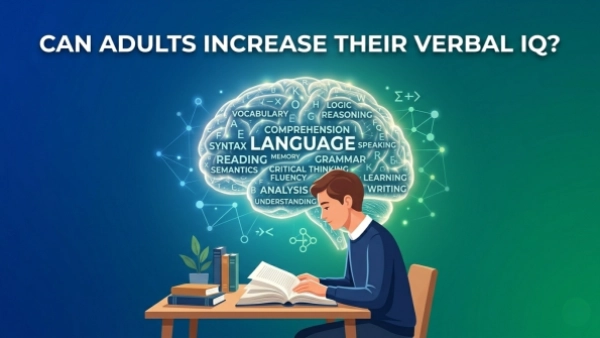
Verbal intelligence is often misunderstood as simply having a strong vocabulary. In reality, it is the ability to use language precisely, persuasively, and strategically. It involves comprehension, clarity, nuance, reasoning, and emotional awareness—all expressed through words.
In professional settings, verbal intelligence is not optional. It directly influences leadership effectiveness, negotiation outcomes, and long-term career advancement.
The ability to think clearly is powerful.
The ability to communicate that clarity is transformative.
What Is Verbal Intelligence?
Verbal intelligence is far more than having a large vocabulary or speaking fluently. It is the ability to understand, analyze, structure, and strategically use language to think clearly and communicate effectively.
At its core, verbal intelligence refers to the capacity to:
- Understand complex language in written and spoken form
- Interpret meaning accurately, including implied or nuanced meaning
- Recognize subtle distinctions between similar concepts
- Form coherent, logically structured arguments
- Explain abstract or technical ideas clearly
- Persuade others using reasoned communication
- Adapt tone, wording, and structure to different audiences
It combines cognitive ability with linguistic precision. In other words, it reflects how well someone can think through language—not just speak it.
Professionals with high verbal intelligence do not simply “talk well.” They:
- Structure ideas logically before expressing them
- Anticipate objections before they arise
- Choose words carefully for clarity and impact
- Adjust tone strategically depending on context
- Detect ambiguity or weak reasoning in conversations
Verbal intelligence shapes how effectively a person influences others, solves problems collaboratively, and communicates under pressure.
It is not decorative. It is strategic.
Verbal Intelligence in Leadership
Leadership is fundamentally a communication role. Regardless of industry or position, leaders spend most of their time aligning people, clarifying direction, resolving conflict, motivating teams, and making decisions—all through language.
Vision, alignment, motivation, conflict resolution, and strategic direction depend on communication precision.
Without verbal intelligence, authority weakens.
1. Articulating Vision Clearly
A vision is often abstract. It may involve long-term strategy, competitive positioning, innovation, or cultural transformation. But if a leader cannot translate that vision into language that others understand, it remains theoretical.
Leaders must convert complexity into clarity.
Weak verbal clarity leads to:
- Misalignment across departments
- Confusion about priorities
- Frustration among team members
- Reduced performance and accountability
When instructions are vague, execution becomes inconsistent.
Strong verbal intelligence enables leaders to:
- Simplify complexity without oversimplifying critical details
- Define goals precisely with measurable expectations
- Frame challenges constructively rather than alarmingly
- Communicate priorities consistently across contexts
- Reinforce key messages with structured repetition
Clarity reduces cognitive load. When teams understand exactly what success looks like, they perform more confidently.
When a leader cannot explain the mission clearly, execution suffers—even if the strategy itself is strong.
2. Framing Decisions Persuasively
Leadership requires making decisions that may not initially be popular. Whether introducing organizational change, budget adjustments, or new policies, buy-in is essential.
A verbally intelligent leader understands that persuasion is not manipulation. It is structured reasoning.
They:
- Present rationale logically and sequentially
- Explain the “why” before the “what”
- Anticipate counterarguments
- Address concerns proactively
- Use evidence and examples strategically
- Clarify trade-offs honestly
Instead of saying, “This is the decision,” they explain:
- The problem
- The constraints
- The alternatives considered
- The reasoning behind the final choice
Clear structure builds credibility. When reasoning is visible, trust increases—even among those who disagree.
3. Managing Conflict Through Language
Conflict rarely escalates because of facts alone. It escalates because of wording, tone, assumptions, and interpretation.
Language can either inflame tension or diffuse it.
Leaders with high verbal intelligence:
- Separate behavior from identity
- Avoid accusatory phrasing
- Clarify misunderstandings quickly
- Ask questions before drawing conclusions
- Reframe criticism into constructive dialogue
For example:
Instead of:
“You’re not committed.”
A verbally intelligent leader might say:
“I’ve noticed deadlines have slipped over the past two weeks. Can we discuss what obstacles might be affecting progress?”
The difference is structural. The first statement attacks identity. The second focuses on observable behavior and invites discussion.
Language determines whether a conversation becomes defensive or productive.
4. Building Psychological Safety
Teams perform best when individuals feel safe to express concerns, ideas, and dissenting views. Psychological safety is built through consistent communication patterns.
Verbally intelligent leaders:
- Ask open-ended questions
- Invite alternative viewpoints
- Paraphrase to confirm understanding
- Avoid dismissive or minimizing language
- Publicly acknowledge contributions
Statements like:
“Help me understand your reasoning,”
or
“That’s an interesting perspective—can you expand on it?”
Signal intellectual respect.
Language shapes culture. The tone a leader sets becomes the tone the organization adopts.
Verbal Intelligence in Negotiation
Negotiation is structured communication under pressure. It requires logical clarity, emotional control, and strategic framing.
Strong negotiators understand that language defines the negotiation environment itself.
1. Defining the Problem Precisely
Poor negotiators argue positions.
Skilled negotiators clarify interests.
A position is a stated demand.
An interest is the underlying motivation.
Example:
Position: “We need a lower price.”
Interest: “We need to reduce long-term operating costs.”
Once interests are identified, creative solutions become possible. Perhaps pricing remains stable, but payment terms change. Perhaps volume adjustments reduce cost over time.
Verbally intelligent negotiators identify underlying concerns and reframe discussions accordingly.
Clarity reveals flexibility.
2. Asking Strategic Questions
High-level negotiation is driven by inquiry, not assertion.
Instead of making demands, strong negotiators ask:
- “What constraints are you facing?”
- “Which factors are most important to you?”
- “What risks are you trying to minimize?”
- “How would you define a successful agreement?”
Precise questions uncover hidden priorities and unspoken fears.
Language becomes a diagnostic tool. The quality of the negotiation often depends on the quality of the questions asked.
3. Controlling Framing
Framing influences perception. Two descriptions of the same reality can produce different reactions.
Consider:
“This will cost $50,000.”
“This investment will generate long-term efficiency gains.”
Both may be true. But framing shifts focus—from expense to value.
Verbally intelligent negotiators:
- Highlight long-term outcomes
- Emphasize shared interests
- Avoid zero-sum language
- Use neutral wording during disagreement
Framing does not distort truth. It prioritizes perspective strategically.
4. Managing Emotional Escalation
Negotiations often trigger defensiveness, ego, or fear of loss.
Under pressure, language tends to become reactive.
Strong verbal intelligence allows professionals to:
- Stay calm under emotional provocation
- Avoid absolute language (“always,” “never”)
- Reframe confrontational statements
- Separate facts from interpretation
- Clarify rather than counterattack
Precision reduces escalation. Calm, structured responses often lower tension automatically.
Verbal Intelligence and Career Success
Beyond leadership and negotiation, verbal intelligence influences nearly every professional milestone.
Communication is visible. Thinking quality is inferred from speaking quality.
1. Performance Evaluations and Promotions
Advancement often depends on how clearly you articulate:
- Your contributions
- Your measurable impact
- Your future goals
- Your strategic thinking
Two employees may produce equal results. The one who can explain those results clearly is often perceived as more capable.
Employees who cannot clearly express value may be overlooked—regardless of performance.
Clear communication signals competence, confidence, and readiness for responsibility.
2. Interview Performance
Interviews test more than technical skill. They assess:
- Thought structure
- Clarity of explanation
- Logical sequencing
- Ability to summarize experience
- Adaptability of language
Strong verbal intelligence allows candidates to:
- Answer concisely
- Provide structured responses
- Use relevant, well-framed examples
- Avoid rambling or filler language
- Adjust tone depending on interviewer cues
Clarity builds credibility. Structured responses signal executive potential.
3. Cross-Functional Collaboration
Modern organizations are interdisciplinary. Engineers collaborate with marketers. Analysts collaborate with executives.
Verbally intelligent professionals:
- Adjust terminology based on audience knowledge
- Avoid unnecessary jargon
- Clarify assumptions explicitly
- Confirm mutual understanding
- Detect misinterpretations early
Miscommunication costs time, trust, and revenue.
Precise language prevents rework and misunderstanding.
4. Executive Presence
Executive presence is often communicated verbally before it is perceived visually.
Key traits include:
- Structured speaking
- Controlled pacing
- Deliberate word choice
- Logical sequencing
- Calm tone under pressure
- Clear summarization of complex issues
Verbal intelligence strengthens authority without arrogance.
When someone speaks clearly and logically, others naturally attribute competence and leadership capacity.
The Cognitive Advantage Behind Verbal Intelligence
Verbal intelligence reflects deeper cognitive abilities, including:
- Pattern recognition
- Logical structuring
- Abstract reasoning
- Emotional awareness
- Context sensitivity
It enables professionals to:
- Think before speaking
- Detect weak reasoning
- Anticipate objections
- Adapt messaging dynamically
- Recognize subtle implications
- Structure complex arguments quickly
This combination produces strategic communication.
It is not just about expression. It is about disciplined thinking made visible through language.
How to Strengthen Verbal Intelligence for Professional Growth
Verbal intelligence is not fixed. It can be developed deliberately.
1. Practice Structured Thinking
Before speaking, mentally organize:
- What is my main point?
- What evidence supports it?
- What objection might arise?
- What outcome do I want?
Structure first. Speak second.
This habit transforms clarity.
2. Expand Vocabulary With Nuance
Study words in context. Focus on:
- Connotation
- Tone
- Intensity
- Precision
- Subtle distinctions between similar terms
The difference between “concerned” and “alarmed” matters.
The difference between “suggest” and “recommend” matters.
Subtle word choice affects persuasion and perception.
3. Analyze Strong Communicators
Observe leaders, executives, or public speakers known for clarity.
Notice:
- How they sequence ideas
- How they handle objections
- How they pause strategically
- How they reframe difficult questions
- How they simplify without losing substance
Modeling strong communicators accelerates growth.
4. Develop Active Listening
Verbal intelligence includes interpretation, not just expression.
Listen for:
- Assumptions
- Emotional undertones
- Hidden priorities
- Ambiguity
- Logical gaps
Better listening produces better responses.
5. Refine Under Pressure
Communication weaknesses surface during stress.
Practice:
- Summarizing arguments quickly
- Explaining complex ideas simply
- Responding calmly to criticism
- Speaking concisely during time constraints
Confidence grows through repetition and exposure.
What High-Verbal Leaders Do Differently
They:
- Think in structured arguments
- Speak with precision
- Avoid vague or emotionally reactive language
- Ask strategic, clarifying questions
- Reframe tension constructively
- Adapt tone intentionally
- Align words with long-term objectives
- Make reasoning transparent
They do not rely solely on charisma.
They rely on disciplined clarity.
Final Insight
Technical skill may open doors.
Verbal intelligence determines how far you advance once inside.
- In leadership, it aligns teams.
- In negotiation, it shapes outcomes.
- In careers, it accelerates advancement.
Language is not merely a tool for expression.
It is a tool for influence, alignment, strategy, and trust.
When you sharpen your verbal intelligence, you refine not only how you speak—but how you think, lead, negotiate, and succeed.