Reading a novel for entertainment is one thing. Reading a dense legal argument, a philosophical essay, or a scientific paper is something else entirely.
Complex texts demand more than basic literacy. They require sustained attention, analytical discipline, vocabulary precision, and logical tracking. Many adults assume that if a text feels difficult, the problem is intelligence. In reality, it is usually strategy.
Reading comprehension for complex material is a trainable skill.
This guide explains why difficult texts feel overwhelming—and how to systematically improve your ability to understand, analyze, and retain them.
Why Complex Texts Feel So Difficult
Before improving comprehension, it is important to understand why complex texts feel mentally exhausting in the first place. Difficulty is not random. It is usually the result of increased cognitive demands placed on attention, memory, vocabulary, and reasoning—all at the same time.
Complex texts often include:
- Dense vocabulary
- Long, multi-clause sentences
- Abstract concepts
- Implicit assumptions
- Technical terminology
- Layered arguments
- Minimal repetition
- Compressed logic
- Subtle transitions between ideas
Unlike casual writing, advanced texts are not designed for effortless flow. They are often written to communicate precise, compact ideas to readers who already share background knowledge. The author assumes familiarity with the subject, expects readers to tolerate ambiguity, and rarely pauses to simplify.
Cognitive Load and Working Memory
One major reason complex texts feel overwhelming is cognitive load.
Your working memory—the system responsible for holding and manipulating information temporarily—has limited capacity. When a sentence contains multiple clauses, unfamiliar terminology, and layered reasoning, your brain must:
- Decode vocabulary
- Track grammatical structure
- Hold earlier parts of the sentence in memory
- Connect ideas logically
- Integrate the sentence into the larger argument
If any part of that chain fails, comprehension weakens.
When reading casually, working memory is not heavily taxed. But dense material pushes it to its limit. That mental strain is often mistaken for “I’m not smart enough,” when it is actually “I need better strategies.”
Abstractness Increases Difficulty
Concrete information is easier to process than abstract reasoning.
For example:
- “The cat sat on the chair.” (concrete)
- “Institutional incentives distort long-term behavioral outcomes.” (abstract)
Abstract language requires mental modeling. You must imagine invisible systems, relationships, or theoretical frameworks. Without prior exposure, that modeling is slow and effortful.
Minimal Repetition Reduces Reinforcement
In simpler writing, key ideas are repeated frequently. In complex writing, repetition is minimal. Authors move forward quickly, assuming you are tracking the structure.
If you miss one foundational point, the rest of the argument can feel unstable.
Implicit Assumptions Create Hidden Gaps
Advanced texts often rely on unstated assumptions:
- Historical context
- Theoretical frameworks
- Definitions that differ from everyday usage
- Prior debates
When those assumptions are unfamiliar, comprehension suffers—even if you understand every word.
Surface Reading vs. Deep Reading
Without active strategies, your brain defaults to surface reading.
Surface reading means:
- Recognizing words without integrating meaning
- Moving your eyes forward without evaluating logic
- Feeling a vague sense of familiarity
- Confusing recognition with understanding
You may finish a page and realize you remember almost nothing. That is surface processing.
Deep reading, in contrast, requires:
- Integration
- Reflection
- Structural mapping
- Error detection
- Active questioning
The solution to complex reading is not speed. It is deliberate cognitive engagement.
Shift From Passive Reading to Active Reading
The biggest mistake readers make is treating difficult material the same way they treat casual content.
You cannot read philosophy the way you read social media posts.
Passive Reading
- Skimming quickly
- Highlighting excessively without purpose
- Moving on when confused
- Hoping clarity will appear later
- Avoiding rereading
- Multitasking
Passive reading creates the illusion of progress without building understanding.
Active Reading
- Questioning claims
- Identifying structure
- Paraphrasing key ideas
- Tracking arguments carefully
- Monitoring confusion
- Pausing deliberately
- Revisiting unclear sections
Complex comprehension begins with mental engagement. You must treat reading as cognitive work, not background activity.
Step 1: Preview Before You Read
Previewing is an underused but powerful strategy.
Before diving in:
- Read the title slowly.
- Examine subtitles.
- Scan headings and subheadings.
- Read the introduction and conclusion carefully.
- Notice repeated key terms.
Ask yourself:
- What is this text trying to prove?
- What problem is it addressing?
- What kind of evidence might it use?
- What prior knowledge might be required?
Previewing builds a mental scaffold. Without it, information enters your mind without structure and becomes harder to organize.
When you know what you are looking for, comprehension becomes targeted rather than reactive.
Step 2: Read in Sections, Not All at Once
Long passages overwhelm working memory.
Instead:
- Break the material into small sections.
- Stop after each section.
- Pause intentionally.
- Summarize before continuing.
If you cannot explain what you just read in one or two clear sentences, your understanding is incomplete.
Re-read immediately rather than pushing forward.
Comprehension compounds when clarity is established early. Confusion compounds when ignored.
Step 3: Paraphrase Aggressively
Paraphrasing is one of the most powerful tools for deep comprehension.
After reading a dense paragraph:
- Restate the main idea in simpler language.
- Replace jargon with everyday words.
- Clarify cause-and-effect relationships.
- Identify the core claim.
If a sentence is 40 words long, rewrite it in 15.
If you cannot simplify it, you likely do not fully understand it yet.
This process prevents the illusion of understanding—a common trap where text feels familiar but remains vague.
Paraphrasing forces active reconstruction of meaning.
Step 4: Track the Argument Structure
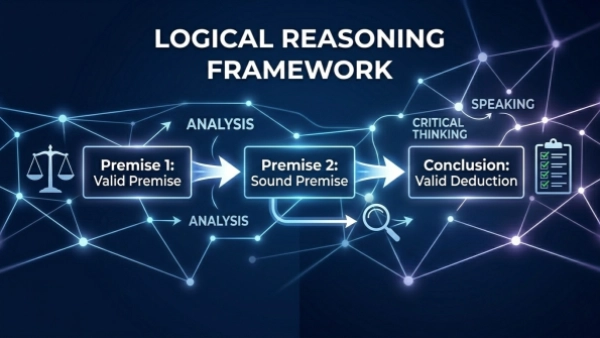
Most advanced texts are structured arguments.
They are not collections of facts; they are chains of reasoning.
Identify:
- The main claim (thesis)
- Supporting reasons
- Evidence
- Counterarguments
- Assumptions
- Final conclusions
Create a rough outline:
Claim:
- Reason 1:
- Evidence:
- Reason 2:
- Counterpoint:
- Conclusion:
Mapping structure transforms confusion into clarity.
Once you see the skeleton, details become easier to attach and remember.
Step 5: Look Up Words Strategically
Vocabulary gaps quietly undermine comprehension.
However, looking up every unfamiliar word disrupts focus.
Instead:
- Infer meaning from context first.
- Identify whether the word is central to the argument.
- Look up only essential terms.
- Keep a vocabulary journal.
- Revisit new words later in the week.
Over time, vocabulary depth increases through repetition across contexts.
Complex reading becomes easier as your internal lexicon expands.
Step 6: Slow Down Sentence Processing
Dense sentences often hide multiple ideas within clauses.
Break them down:
- Identify the subject.
- Identify the main verb.
- Remove nonessential modifiers.
- Extract the core claim.
- Add details back gradually.
For example:
Long sentence → Strip to core → Add details back.
This analytical dissection improves syntactic awareness and reduces overwhelm.
Step 7: Ask Critical Questions While Reading
Engagement increases retention and precision.
Ask:
- What is the author assuming?
- What evidence supports this?
- Is the reasoning valid?
- Are alternative explanations ignored?
- Does the conclusion logically follow?
Turning reading into dialogue strengthens reasoning and attention.
You are not just absorbing ideas—you are evaluating them.
Step 8: Re-Read Strategically
Re-reading is refinement, not weakness.
On the second pass:
- Focus on structure rather than vocabulary.
- Notice transitions between ideas.
- Strengthen understanding of relationships.
- Identify recurring themes.
Research consistently shows that targeted re-reading significantly improves comprehension and retention.
Step 9: Write Brief Analytical Summaries
Writing solidifies understanding.
After a section, write:
- A concise 5-sentence summary.
- The central claim.
- The strongest supporting evidence.
- One possible weakness or limitation.
Writing forces clarity.
If you can explain it clearly and concisely, you truly understand it.
Step 10: Build Background Knowledge
Many texts feel difficult because they assume prior knowledge.
For example:
- Philosophical works assume familiarity with historical debates.
- Scientific articles assume domain terminology.
- Legal texts assume knowledge of structure and definitions.
Before tackling advanced material:
- Read introductory guides.
- Study key terminology.
- Watch foundational lectures.
- Review summaries of related debates.
Background knowledge reduces cognitive load dramatically. It allows your brain to recognize patterns rather than process everything from scratch.
Strengthen Core Skills That Support Comprehension
Complex reading relies on underlying abilities.
Vocabulary Depth
Study nuance, connotation, and context—not just definitions.
Logical Reasoning
Practice identifying premises, conclusions, and logical fallacies.
Working Memory
Reduce distractions and read in focused sessions.
Concentration
Train sustained attention with timed reading blocks.
Improving these supporting skills accelerates reading growth.
Common Mistakes to Avoid
Reading too quickly
Highlighting entire pages
Ignoring confusion
Multitasking
Avoiding difficult texts
Expecting instant clarity
Complex comprehension requires discomfort. Cognitive strain often signals growth.
How Long Does It Take to Improve?
Improvement depends on consistency and quality of practice.
With structured effort:
- Noticeable gains can appear within 2–3 months.
- Significant improvements may require 6–12 months.
- Mastery develops over years of disciplined reading.
Thirty to forty-five minutes of focused daily reading is more effective than occasional marathon sessions.
Consistency builds endurance.
What Improvement Looks Like
Over time, you will notice:
- Fewer rereads required
- Faster identification of main arguments
- Clearer understanding of structure
- Reduced mental fatigue
- Improved retention
- Greater confidence
Texts that once felt impenetrable begin to feel organized and logical.
The Bigger Picture
Reading complex texts strengthens more than comprehension.
It develops:
- Analytical thinking
- Verbal reasoning
- Argument evaluation
- Intellectual independence
- Cognitive resilience
The ability to understand difficult material separates surface-level consumption from deep understanding.
And it is trainable.
With deliberate strategies, structured practice, and sustained engagement, your comprehension can improve far beyond your current level.
The principle is simple—but demanding:
Slow down. Engage actively. Think critically. Repeat consistently.