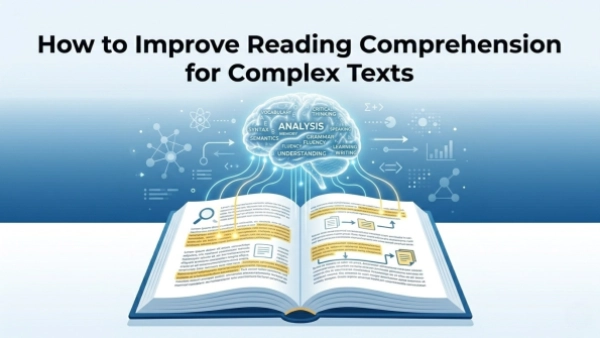
Verbal IQ refers to a person’s ability to understand, analyze, and reason using language. It measures how effectively you comprehend written information, recognize word relationships, apply logic through language, and express ideas clearly.
Unlike simple vocabulary memorization, verbal IQ reflects how well you think with words—how you interpret meaning, detect structure, and draw accurate conclusions from written or spoken information.
In intelligence testing, verbal IQ is commonly measured as part of broader cognitive assessments such as the Wechsler Adult Intelligence Scale (WAIS) and the Stanford-Binet Intelligence Scales. These assessments evaluate verbal comprehension alongside other cognitive abilities like working memory and perceptual reasoning.
This guide explains what verbal IQ really measures, how it differs from general intelligence, real-world examples, and proven strategies to improve it.
Verbal IQ Definition
Verbal IQ is a component of overall intelligence that focuses on language-based reasoning and comprehension. It reflects how effectively a person understands words, interprets meaning, analyzes arguments, and expresses ideas with clarity and precision.
Rather than measuring how much someone talks or how many complex words they know, verbal IQ evaluates how well a person thinks through language. It captures the ability to process written and spoken information logically, recognize subtle distinctions in meaning, and communicate ideas in a structured way.
Verbal IQ typically includes skills such as:
- Understanding word meanings and subtle nuances
- Identifying relationships between concepts
- Interpreting written passages accurately
- Drawing logical conclusions from stated information
- Recognizing patterns and structures in language
- Expressing ideas clearly, coherently, and precisely
In standardized intelligence assessments such as the Wechsler Adult Intelligence Scale, verbal IQ is usually represented under the domain of Verbal Comprehension. This domain measures not only accumulated knowledge but also the ability to apply reasoning to language-based material.
Importantly, verbal IQ reflects both:
- Crystallized intelligence — knowledge gained through reading, education, and life experience
- Language-based reasoning ability — the capacity to apply logic to words and concepts
In other words, verbal IQ is not just about what you know—it is about how effectively you use what you know.
What Does Verbal IQ Actually Measure?
Verbal IQ measures several interconnected cognitive abilities that work together when processing language. These abilities are distinct but mutually reinforcing.
1. Vocabulary Depth
Vocabulary depth goes beyond knowing dictionary definitions. It includes:
- Understanding multiple meanings of the same word
- Recognizing subtle distinctions between similar terms
- Interpreting tone, connotation, and emotional weight
- Identifying appropriate usage in formal and informal contexts
For example, the words assertive, aggressive, and confident are related but not interchangeable. A person with strong verbal IQ understands when each term is appropriate and what subtle implications it carries.
True vocabulary mastery is about precision, not quantity.
2. Reading Comprehension
Reading comprehension measures how accurately you interpret written information. It involves:
- Identifying the main idea or central argument
- Distinguishing facts from opinions
- Understanding implied meaning (inference)
- Recognizing tone and intent
- Following the logical structure of an argument
Strong verbal IQ requires disciplined reading. Many comprehension errors occur not because the material is difficult, but because the reader fills gaps with assumptions rather than relying strictly on the text.
Effective comprehension means extracting meaning exactly as presented—no more, no less.
3. Verbal Reasoning
Verbal reasoning is the ability to analyze and evaluate arguments expressed in language. It includes:
- Following conditional statements (if–then logic)
- Detecting hidden assumptions
- Evaluating evidence
- Identifying flawed reasoning
- Determining whether conclusions logically follow
This skill is particularly important in logical conclusion questions. High verbal IQ requires resisting intuition and focusing instead on strict logical necessity.
A conclusion must be supported by the information given—not by personal beliefs or outside knowledge.
4. Conceptual Relationships
Verbal intelligence also involves recognizing how ideas connect. These relationships may include:
- Cause and effect
- Part to whole
- Function or purpose
- Degree or intensity
- Category and hierarchy
- Synonymy and contrast
Recognizing these patterns allows individuals to solve analogies and classification problems efficiently. It transforms language from a collection of isolated words into an organized system of structured meaning.
How These Abilities Work Together
These components do not operate independently. When reading a complex article, for example, you must:
- Understand vocabulary
- Follow logical argumentation
- Recognize conceptual relationships
- Draw accurate conclusions
Together, these abilities determine how efficiently you process and use language in both academic and real-world contexts.
Verbal IQ vs. General IQ
General IQ is a broad measure of cognitive ability. Modern intelligence models typically include multiple domains, such as:
- Verbal comprehension
- Perceptual or spatial reasoning
- Working memory
- Processing speed
Verbal IQ represents only one part of this broader profile.
An individual may score high in verbal IQ but average in spatial reasoning. Another person may excel in visual pattern recognition but have moderate verbal performance. Intelligence is multidimensional, and strengths often vary across domains.
Verbal IQ is particularly associated with crystallized intelligence—the knowledge accumulated through reading, education, and experience. Unlike processing speed, which may decline slightly with age, crystallized abilities often continue to grow throughout adulthood.
This makes verbal intelligence one of the most stable and developable components of cognitive ability.
Examples of Verbal IQ Questions
To better understand how verbal IQ is assessed, consider these common question formats.
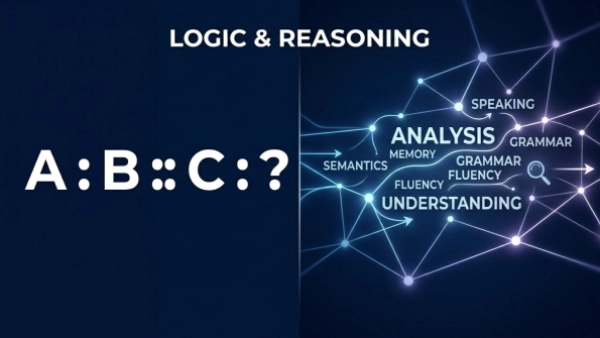
Verbal Analogies
Example:
Bird is to nest as bee is to ___
Answer: Hive
This question tests the ability to identify relationships (animal → home). The task is not about memorization but about recognizing structural similarity.
Vocabulary (Synonyms and Antonyms)
Word: Resilient
Which word is closest in meaning?
A) Fragile
B) Adaptable
C) Rigid
D) Weak
Correct answer: B) Adaptable
This measures depth of understanding and sensitivity to nuance. “Adaptable” captures the core meaning, while the other options either contradict or distort it.
Reading Comprehension
You may read a short passage and answer questions such as:
- What is the author’s primary claim?
- Which statement is directly supported by the text?
- What assumption does the argument rely on?
These questions evaluate logical interpretation rather than memory. The correct answer must be grounded in the text—not inferred from personal experience.
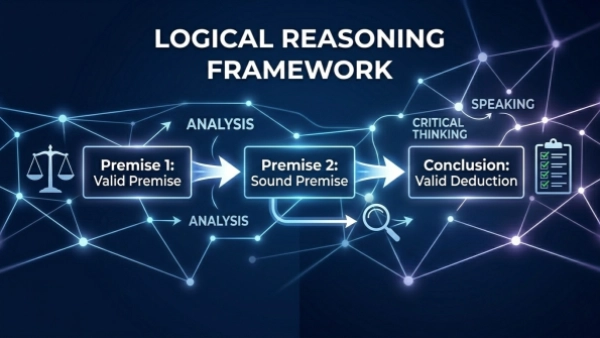
Logical Conclusions
Statement:
All engineers are analytical.
Some analytical people are musicians.
Can we conclude that some engineers are musicians?
Correct answer: Cannot be determined.
This question tests logical discipline. Although it may seem plausible that some engineers could be musicians, the information provided does not guarantee that overlap.
Verbal IQ requires strict adherence to given premises.
Why Verbal IQ Matters in Real Life
Verbal IQ influences far more than test performance. It affects how effectively you function in daily life and professional environments.
It contributes to:
- Academic success
- Career advancement
- Communication clarity
- Negotiation effectiveness
- Critical thinking
- Decision-making accuracy
Strong verbal reasoning helps you:
- Evaluate arguments critically
- Detect misleading claims
- Identify hidden assumptions
- Communicate ideas persuasively
- Avoid misinterpretation
In professional settings, individuals with high verbal intelligence often excel in law, education, leadership, writing, consulting, policy analysis, and research. Clear thinking expressed through clear language is a major competitive advantage.
Can Verbal IQ Be Improved?
Yes. While genetics influence baseline cognitive potential, verbal IQ is highly trainable because it is deeply connected to accumulated knowledge and reasoning practice.
Cognitive psychology research consistently demonstrates that:
- Structured reading increases vocabulary depth
- Active recall strengthens retention
- Logical reasoning exercises improve analytical discipline
- Writing practice enhances clarity of thought
Improvement requires deliberate effort rather than passive exposure. Simply consuming information is not enough; active engagement with language is essential.
How to Improve Verbal IQ
1. Read Actively, Not Passively
Select material slightly above your current comfort level. As you read:
- Summarize each paragraph in your own words
- Identify the author’s central claim
- Track how evidence supports conclusions
- Question assumptions
Active reading strengthens comprehension and logical structure recognition.
2. Build Vocabulary in Context
Avoid isolated memorization. Instead:
- Learn new words from real texts
- Study how they function in sentences
- Practice using them accurately
- Notice tone and connotation
Deep understanding ensures long-term retention and flexible usage.
3. Practice Verbal Reasoning Questions
Exposure to structured problems improves pattern recognition. Regularly practice:
- Analogies
- Logical statements
- Reading comprehension
- Classification tasks
Review incorrect answers carefully to understand the reasoning error.
4. Analyze Arguments Systematically
When evaluating an argument, ask:
- What is the main conclusion?
- What evidence is provided?
- What assumptions are implied?
- Does the conclusion logically follow?
This builds disciplined reasoning habits.
5. Improve Writing Skills
Writing forces you to organize thoughts clearly. Practice:
- Explaining complex ideas simply
- Eliminating vague language
- Structuring arguments logically
- Supporting claims with evidence
Clear writing reinforces clear thinking, which in turn strengthens verbal intelligence.
Common Misconceptions About Verbal IQ
Myth 1: Verbal IQ equals being talkative.
Reality: It measures structured reasoning with language, not frequency of speech.
Myth 2: Memorizing vocabulary lists is enough.
Reality: Understanding relationships and applying logic is more important than word quantity.
Myth 3: Verbal IQ cannot change in adulthood.
Reality: Because it is closely tied to knowledge and reasoning practice, it is one of the most improvable cognitive domains.
Final Thoughts
Verbal IQ is the ability to think precisely through language. It reflects how well you interpret meaning, analyze structure, and apply logic in written and spoken communication.
It is not about using complex words—it is about using the right words and drawing accurate conclusions.
With consistent practice in reading, reasoning, and writing, verbal IQ can improve significantly over time. And because language shapes thought, strengthening verbal intelligence often strengthens overall cognitive clarity.
In the end, clearer language leads to clearer thinking—and clearer thinking leads to better decisions.