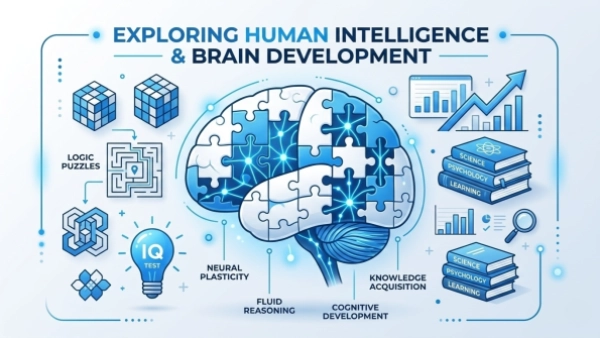
Intelligence Quotient (IQ) scores are commonly used as a way to estimate certain aspects of cognitive ability, including logical reasoning, problem-solving, pattern recognition, and memory. While an IQ score does not fully define a person’s intelligence or potential, it can provide useful insights when used responsibly in educational and professional contexts. Schools, psychologists, and some employers sometimes use IQ-related assessments to better understand learning abilities, identify strengths, and guide individuals toward suitable academic or career paths.
Understanding how IQ scores are applied in real-world settings can help clarify their value as well as their limitations.
Understanding What an IQ Score Represents
An IQ score is typically derived from standardized cognitive tests designed to measure different types of reasoning ability. These tests often include questions involving abstract patterns, numerical logic, spatial reasoning, and verbal understanding.
Most modern IQ tests are standardized so that the average score is set at 100, with the majority of people scoring within a typical range around that average. This standardization allows psychologists and educators to compare results across individuals and populations in a consistent way.
z = (x - μ) / σ
Standardized scores often rely on statistical normalization similar to the concept above, where an individual score is compared with the population average and distribution. This method helps determine how far above or below the average a particular result falls.
The Role of IQ Scores in Education
1. Identifying Gifted Students
One of the most common educational uses of IQ assessments is identifying students who may qualify for gifted or advanced academic programs. Schools sometimes use cognitive ability tests to recognize students who demonstrate exceptional reasoning or problem-solving abilities.
Students who score significantly above the average range may be placed in:
- accelerated learning programs
- advanced placement courses
- specialized academic tracks
- enrichment programs for gifted learners
These programs are designed to provide greater intellectual challenges and prevent academically advanced students from becoming disengaged in standard classroom environments.
2. Detecting Learning Difficulties
IQ testing can also help educators identify learning challenges. In some cases, a student may show strong overall intelligence but struggle significantly with a specific skill such as reading, writing, or mathematical processing.
By comparing cognitive ability with academic performance, psychologists may detect patterns associated with learning disorders such as:
- reading difficulties
- processing speed challenges
- working memory limitations
This information helps schools design individualized education plans (IEPs) that support the student’s unique learning needs.
3. Supporting Educational Guidance
IQ assessments can also help educators understand how students learn best. For example, some students show stronger performance in spatial reasoning or abstract logic, while others excel in verbal comprehension.
This insight may guide decisions about:
- academic strengths
- preferred learning strategies
- enrichment activities
- long-term educational planning
However, modern educational practice emphasizes that IQ is only one factor among many that influence academic success.
How IQ Scores Are Used in Career Assessment
1. Evaluating Cognitive Abilities in Hiring
Certain employers use cognitive ability tests during the hiring process. These tests often resemble simplified IQ assessments and measure abilities such as logical reasoning, problem solving, and learning speed.
Research in organizational psychology has shown that cognitive ability can sometimes correlate with job performance in roles that involve complex problem solving, technical analysis, or strategic decision-making.
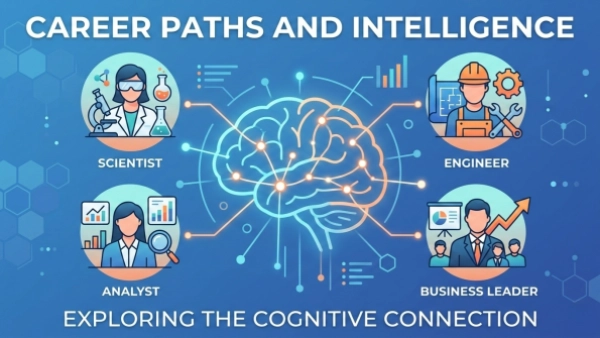
Examples of fields where cognitive assessments may be relevant include:
- engineering and technology
- scientific research
- data analysis
- finance and quantitative roles
Employers use these tests as one part of a broader evaluation process, which may also include interviews, experience reviews, and personality assessments.
2. Career Counseling and Guidance
Career counselors sometimes use cognitive assessments to help individuals better understand their strengths. For example, a person who demonstrates strong spatial reasoning may perform well in careers such as architecture, engineering, or design. Someone with high verbal reasoning skills might excel in fields like law, communication, or education.
These assessments can help individuals explore career options that align with their natural abilities and interests. However, they are typically used as guidance tools rather than strict determinants of career choice.
3. Training and Role Placement
Some organizations use cognitive testing internally to place employees into training programs or specialized roles. Individuals who demonstrate strong analytical skills may be assigned to tasks that require complex reasoning or strategic planning.
Historically, various institutions—including certain military organizations—have used cognitive testing to help determine training pathways and job assignments.
Limitations of IQ Scores
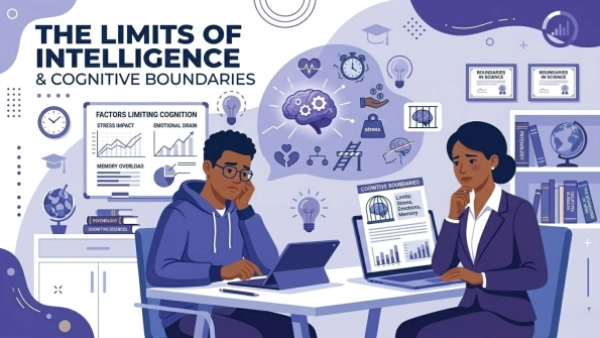
Although IQ scores can provide useful information, they have important limitations.
Intelligence Is Multifaceted
Human intelligence includes many qualities that IQ tests do not measure directly, such as:
- creativity
- emotional intelligence
- leadership ability
- social awareness
- practical problem solving
These abilities often play a major role in real-world success.
Cultural and Environmental Factors
Test performance can sometimes be influenced by factors such as educational background, cultural context, or familiarity with certain types of problem-solving tasks. For this reason, psychologists emphasize that IQ scores should always be interpreted carefully and within the appropriate context.
IQ Does Not Define Potential
A single test score cannot fully predict a person’s future achievements. Motivation, perseverance, opportunity, and education often have a much larger impact on long-term success.
Modern educators and psychologists therefore view IQ scores as informational tools rather than definitive judgments of ability.
A Balanced Approach to Cognitive Assessment
Today, most institutions use a more comprehensive approach when evaluating intelligence and potential. Instead of relying solely on IQ scores, assessments may also consider:
- academic performance
- creativity and innovation
- emotional intelligence
- communication skills
- real-world problem-solving ability
By combining multiple evaluation methods, educators and employers can form a more accurate picture of an individual’s strengths.
Conclusion
IQ scores can play a useful role in both education and career assessment when they are used responsibly. In schools, they may help identify gifted students, detect learning challenges, and guide educational planning. In professional environments, cognitive assessments can assist with hiring decisions, career guidance, and skill placement.
However, intelligence is complex and cannot be fully captured by a single number. A person’s potential is shaped by many factors, including creativity, emotional skills, motivation, and life experiences. For this reason, IQ scores should always be considered as one piece of a much larger picture when evaluating human ability and opportunity.